Sewage Cleanup and Sanitization in Butler
24/7 sewage cleanup and sanitization in Butler, PA. Insurance billing accepted. Call (724) 452-7400.
Our technicians are dispatched from our Cranberry Township, PA headquarters and are typically on-site in Butler within 60 minutes of your call.
When a sewer line backs up in an older Butler home, the problem rarely announces itself gently. Cast-iron drain stacks that have been carrying waste since the Eisenhower administration can fail without warning, and in the tight basements of the brick foursquares that line Institute Hill and Lyndora, raw sewage has nowhere to go but across the floor. FireDEX Butler responds to sewage backup calls around the clock — because the bacteria in Category 3 water don’t wait for business hours, and neither do we.
Why Butler Properties See More Sewage Backup Issues
Butler’s housing stock is one of the oldest in Western Pennsylvania. A large share of homes in the 16001 and 16002 ZIP codes were built before 1950, which means original cast-iron drain lines that have had 70-plus years to corrode, offset, or root-infiltrate. When those stacks fail, they fail completely — not with a slow drip but with a full backup into the lowest finished space in the house.
The city’s topography compounds the problem. Connoquenessing Creek and its tributary runs flood low-lying streets during heavy rain events, and when the municipal storm and sanitary systems are overwhelmed, the pressure reverses into residential laterals. Homes in East Butler and along the lower streets near Pullman Park are particularly vulnerable during the spring thaw and after the intense summer storms that roll through Butler County. Galvanized supply lines and aging clay tile sewer laterals — common in the neighborhood housing stock here — crack under freeze-thaw cycling in ways that PVC simply doesn’t.
Our Sewage Cleanup and Sanitization Process in Butler
Sewage is classified as Category 3 contaminated water — the most hazardous category in the industry — which means the cleanup protocol is significantly more involved than a standard water loss. Here is what the process looks like on a typical Butler job:
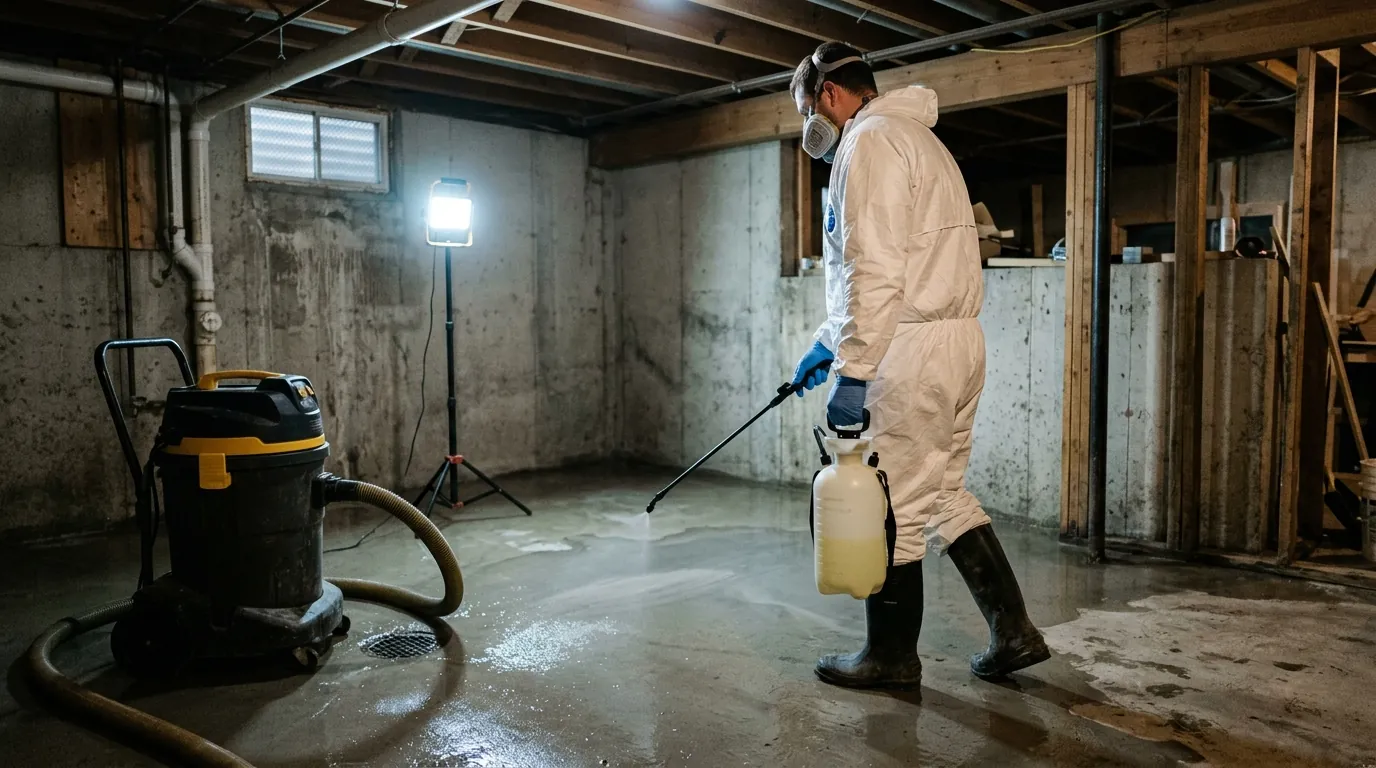
Containment and safety setup. Before any extraction begins, the affected area is isolated with physical barriers and negative air pressure where needed. Technicians work in full PPE. This step is non-negotiable regardless of how small the backup appears.
Solid waste removal and bulk extraction. Standing sewage and solids are removed using truck-mounted extraction equipment. In the low-clearance basements common to Butler’s older homes, we use portable extraction units that can reach corners and crawl spaces that a truck mount cannot.
Structural material assessment. Porous materials — drywall, insulation, wood subflooring, carpet — that have contacted Category 3 water are documented and removed. In homes with original plaster walls, we assess each surface individually; plaster is dense enough that surface contamination does not always penetrate, but we test rather than assume.
Antimicrobial treatment and sanitization. All affected hard surfaces are treated with EPA-registered disinfectants. This step addresses pathogens including E. coli, hepatitis A, and other organisms present in raw sewage. We apply, dwell, and document — the documentation matters for your insurance claim.
Structural drying. Once contaminated materials are removed and surfaces are sanitized, drying equipment — desiccant or refrigerant dehumidifiers and air movers — is placed to bring the structure to acceptable moisture levels before any reconstruction begins.
Reaching Butler from Cranberry Township
FireDEX Butler is headquartered in Cranberry Township, which puts us on Route 228 with direct access north into Butler proper at any hour. We run 24/7 operations, so a call at 2 a.m. from a homeowner watching sewage rise in their basement on Institute Hill or a property manager dealing with a sewer line backup in a Downtown Butler commercial building gets the same response as a midday call. The steep hillside streets in Butler — particularly the grades off North Main and around the Butler County Courthouse corridor — are terrain our crews navigate regularly, which matters when you need equipment staged quickly on a narrow residential street in winter.
Insurance Coordination for Sewage Backup Claims in Butler
Sewage backup coverage is a separate endorsement on most homeowner policies — it is not automatically included in standard water damage coverage, and many Butler homeowners discover this only after a loss. We document every step of the job with photographs, moisture readings, and written scope notes in a format that aligns with how adjusters from the major carriers review claims. We communicate directly with your adjuster and can provide the supporting documentation needed for a sewage backup rider claim. We cannot guarantee coverage outcomes — that is between you and your carrier — but we can make sure the paperwork does not become the reason a legitimate claim is delayed.
Local Note
In Butler’s pre-1950 homes, the original cast-iron cleanout access points are often buried under decades of finished flooring or concealed behind basement wall paneling added in the 1960s and 70s. On jobs in Lyndora and East Butler especially, we routinely spend time locating the actual cleanout before any line camera work or remediation begins. If your plumber cleared the line but did not locate and cap the source, contaminated material can continue to seep into the subfloor cavity — a detail that gets missed when a crew is unfamiliar with how these older homes were originally plumbed.
If you are dealing with a sewage backup or septic overflow anywhere in Butler — from a Downtown commercial property to a hillside foursquare off Institute Hill — call FireDEX Butler at (724) 452-7400. We will assess the situation, contain the hazard, and walk you through every step of the cleanup and sanitization process before work begins.
Sewage Cleanup and Sanitization in Butler: Service Coverage
Frequently Asked Questions
How fast can you arrive for sewage cleanup and sanitization in Butler?
Are homes in Lyndora and Institute Hill more prone to sewage backups than newer construction?
How quickly can FireDEX Butler reach a sewage backup in East Butler or Downtown?
Does Butler's older housing stock change how sewage cleanup is performed?
My home near Connoquenessing Creek flooded during a storm and sewage backed up through the floor drain — is that covered differently than a standard water loss?
What does the sanitization step actually involve, and how do I know the affected area is safe?
Will my homeowners insurance cover sewage cleanup and sanitization in Butler?
Sewage Cleanup and Sanitization response in Butler
Most Butler calls see a technician on-site within 60 minutes from our Cranberry Township headquarters.