Reconstruction Services in Cranberry Township
24/7 reconstruction services in Cranberry Township and surrounding areas. Insurance billing accepted. Call (724) 452-7400.
What happens after the damage is gone
Mitigation stops the bleeding — extraction, drying, debris removal. But when the crews pack up and the fans go quiet, you’re often left staring at a gutted bathroom, a charred wall cavity, or a floor system stripped down to the joists. That gap between “damage contained” and “house livable again” is where reconstruction lives. It’s also where projects stall, budgets balloon, and homeowners discover their restoration contractor doesn’t actually do rebuild work. FireDEX Butler handles both sides of the loss — mitigation and the full structural and cosmetic rebuild that follows.
What reconstruction services actually involves
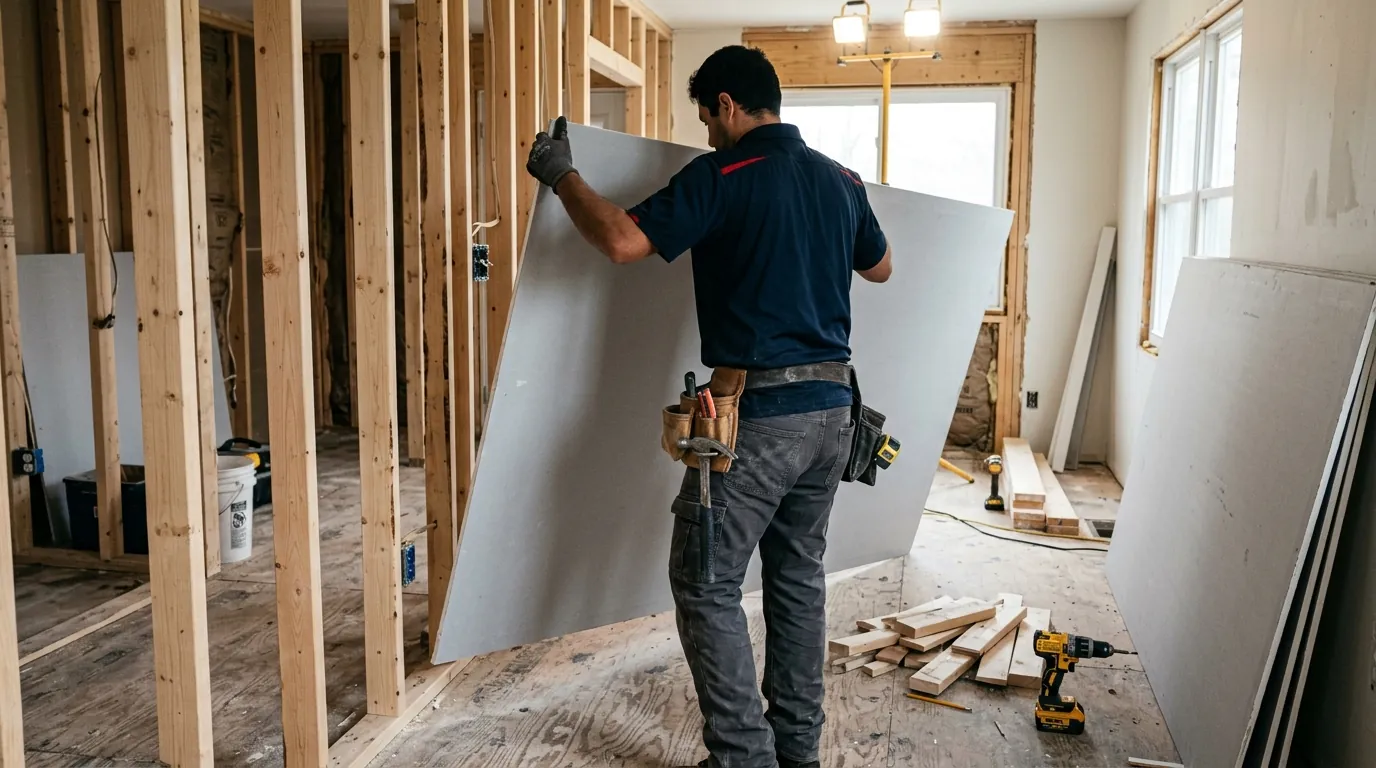
Post-damage reconstruction isn’t remodeling. The scope is dictated by what the loss destroyed, what code requires, and what the insurance carrier will document and approve. That means the work often includes structural framing repairs, subfloor and sheathing replacement, drywall hang and finish, insulation, interior trim, paint, and fixture reinstallation — all sequenced correctly so inspections happen at the right stages and nothing gets buried behind drywall before it’s approved.
In Western Pennsylvania, older housing stock adds complexity. Many homes in Cranberry Township and the surrounding Butler County area were built with dimensional lumber that no longer matches standard sizing, plaster walls over wood lath, and knob-and-tube wiring that gets exposed the moment you open a wall cavity. A fire damage reconstruction job in a 1940s-era home can quickly involve coordinating with an electrician and a plumber before a single piece of drywall goes up. Scoping that correctly at the start — rather than discovering it mid-project — is the difference between a job that closes on time and one that drags for months.
Timeline varies with scope. A single-room rebuild after a contained water loss might take two to three weeks. A fire that moved through a kitchen into the attic framing can mean eight to twelve weeks of structural reconstruction before finish work begins. We give you a written scope of work before any rebuild starts so you know what’s included, what’s excluded, and what the sequencing looks like.
Our process
-
Scope of work and documentation. Before any rebuild begins, we walk the loss with you and your insurance adjuster, photograph every affected system, and produce a line-item scope using Xactimate — the same estimating platform most carriers use. This reduces supplement disputes and keeps the project from being underfunded at the start.
-
Permit pulling and code review. Structural reconstruction in Butler County requires permits for framing, electrical, plumbing, and HVAC work. We pull the required permits and schedule inspections so work proceeds in the correct order. Skipping this step creates title problems when you sell and can void your homeowner’s policy on future claims.
-
Structural and rough-in work. Framing repairs, subfloor replacement, sheathing, and any mechanical rough-ins happen first. This is also when we address anything uncovered during demo — rotted sill plates, compromised load-bearing members, or insulation that absorbed smoke or moisture and needs full replacement.
-
Inspections and close-in. After rough-in inspections pass, we insulate and hang drywall. Closing in the walls before inspections is a common shortcut that creates expensive rework. We don’t do it.
-
Finish work and final walkthrough. Tape, mud, texture matching, paint, trim, flooring, and fixture reinstallation. We match existing finishes as closely as materials allow and do a room-by-room walkthrough with you before we consider the job complete.
What separates a good reconstruction response from a bad one
The most common failure point in post-disaster rebuilding is an incomplete scope written before the full extent of damage is known. An adjuster walks through on day three, writes an estimate based on visible damage, and closes the file. Six weeks later, when the contractor opens the wall, there’s wet insulation, corroded fasteners, or smoke-stained framing that was never included. Getting that documented before the insurance file closes — not after — is a skill that comes from doing this work alongside adjusters repeatedly.
A second failure: finish sequencing. Contractors who primarily do new construction sometimes approach reconstruction the same way, skipping steps that matter specifically in a damaged structure. Moisture content in framing lumber needs to be verified before drywall goes up. Smoke-odor-bearing framing may need encapsulation before insulation is installed. Missing these steps produces callbacks — paint that blisters, odors that return, or moisture readings that trigger a secondary mold claim.
Insurance adjusters look for documentation at every stage: photos of structural members before close-in, moisture readings on framing, permit inspection records. A contractor who doesn’t produce this documentation creates gaps that can delay your final payment or complicate a future claim on the same property.
Seasonal and regional considerations
Western Pennsylvania’s freeze-thaw cycle affects reconstruction scheduling in ways that matter. Exterior work — siding, roofing, window replacement — has a narrower window in late fall and winter. If a fire or storm loss happens in November, some exterior finishes may need temporary weatherproofing while interior work proceeds and exterior work waits for conditions that allow proper installation and curing. We factor this into the project schedule upfront rather than discovering it when materials fail inspection.
Cranberry Township’s growth over the past two decades also means a wide mix of housing vintages in the service area — newer construction in developments off Route 228 alongside older homes in Mars, Valencia, and Zelienople. Each era brings different material standards, and matching finishes in a 1970s split-level requires different sourcing than a 2010s townhome.
Service area
FireDEX Butler provides reconstruction services throughout Cranberry Township and the broader Butler County region, including Mars, Zelienople, Valencia, Wexford, and surrounding communities. The city-specific pages for each area link back here for full service detail.
If you’re past the mitigation phase and need a clear path from gutted rooms back to a livable home, call (724) 452-7400 to get a reconstruction scope of work started.
Frequently Asked Questions
What's the difference between a mitigation scope and a reconstruction scope, and why do I need both?
Do I need permits for post-damage reconstruction, and what happens if I skip them?
How do you handle damage that gets discovered after the insurance estimate is already written?
How do you match existing finishes — texture, trim profiles, flooring — in a partial room rebuild?
What should I do — or avoid doing — while reconstruction is in progress to keep the project on schedule?
Looking for the best reconstruction services company in Cranberry Township?
FireDEX Butler provides licensed and insured reconstruction services in Cranberry Township, PA and the surrounding area, and has served local property owners since 1981. We answer calls 24/7 — call (724) 452-7400 for immediate help.
Need Reconstruction Services now?
We respond 24/7 across Cranberry Township and surrounding PA cities.
Related Coverage
- Our Restoration Services
- Contact FireDEX Butler
- Reconstruction Services in Beaver Falls
- Reconstruction Services in Butler
- Reconstruction Services in Cranberry Township
- Reconstruction Services in Evans City
- Reconstruction Services in Gibsonia
- Reconstruction Services in Mars
- Reconstruction Services in Seven Fields
- Reconstruction Services in Wexford
- Reconstruction Services in Zelienople