Smoke Damage Restoration in Cranberry Township
24/7 smoke damage restoration in Cranberry Township and surrounding areas. Insurance billing accepted. Call (724) 452-7400.
What smoke damage restoration actually involves
Three days after a kitchen fire is extinguished, a homeowner in Cranberry Township opens a closet two rooms away and finds their winter coats smell like charred wood. That’s not a coincidence — smoke travels through HVAC ducts, migrates through wall cavities, and deposits acidic soot on surfaces that never saw a flame. The visible char is the easy part. The invisible residue, the odor locked into porous materials, and the ongoing chemical damage to metals and fabrics are what smoke damage restoration is actually about.
Smoke residue is not just dirty — it’s corrosive. Within hours of a fire, dry soot begins etching chrome fixtures, tarnishing copper, and yellowing plastics. Within days, wet smoke residue (common in low-heat, smoldering fires) penetrates drywall and wood grain deeply enough that surface cleaning alone won’t remove it. Restoration work on a smoke-damaged home involves identifying the type of residue present, selecting the correct cleaning chemistry, deodorizing at the molecular level, and verifying that odor-causing compounds are gone — not just masked.
The timeline from fire to completed smoke restoration typically runs 3 to 10 days depending on the size of the affected area, the soot type, and whether contents need to be packed out for off-site cleaning. Structural materials like drywall, insulation, and subfloor sheathing that cannot be cleaned are removed and replaced.
Our process
1. Soot characterization and scope mapping Before any cleaning begins, the type of soot present is identified. Dry smoke residue from fast, high-temperature fires (wood, paper) behaves differently than wet smoke residue from slow, low-oxygen smoldering (upholstery, synthetic materials). Protein residue from kitchen fires — grease and vaporized organic matter — is nearly invisible but produces some of the most persistent odor. The wrong cleaning method on the wrong residue type can drive it deeper into the substrate. We document affected zones room by room, photograph residue patterns, and note HVAC contamination pathways before touching a surface.
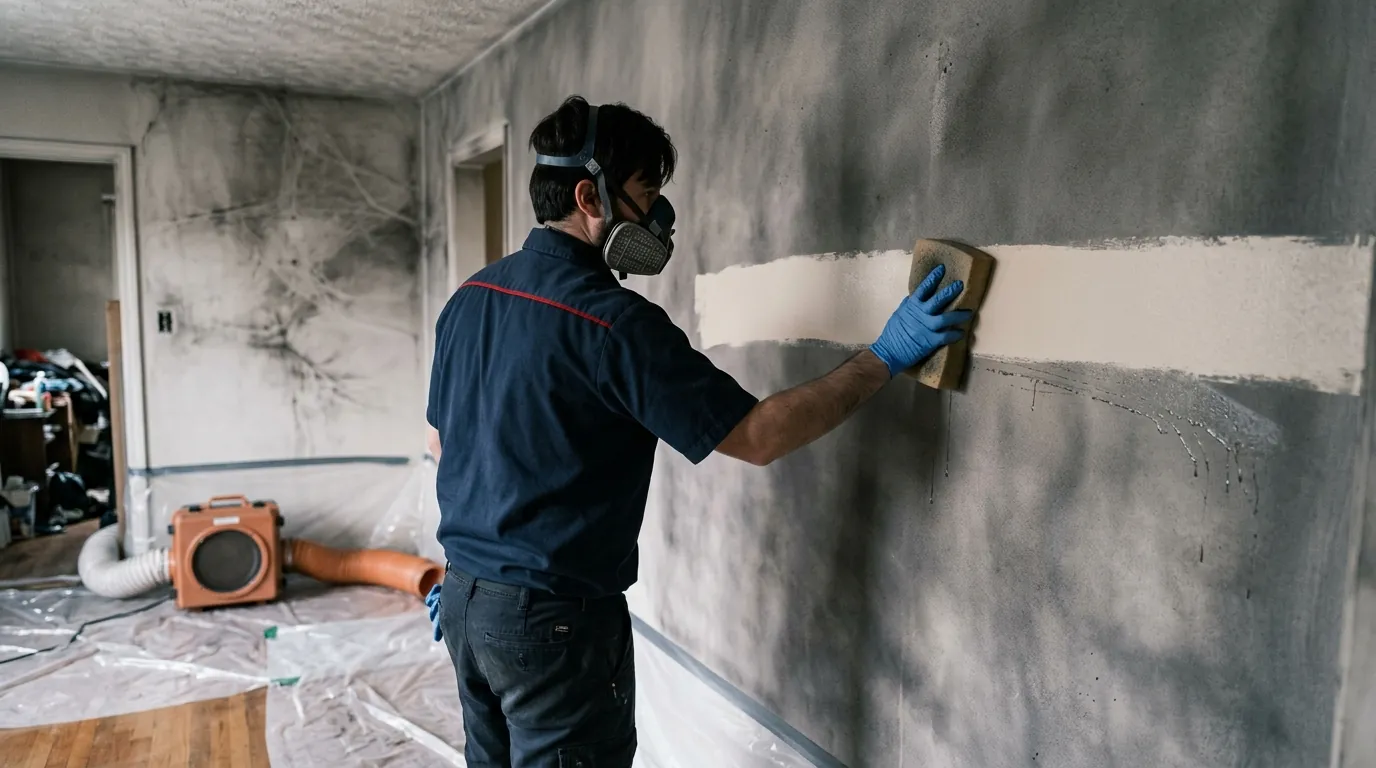
2. Containment and HVAC isolation Smoke residue that has settled can be re-suspended by air movement. Before cleaning begins, the HVAC system is isolated or shut down to prevent cross-contamination. Affected areas are contained from clean zones using poly barriers and negative air pressure where needed. This step is frequently skipped by less-experienced operators, which is how soot ends up in bedrooms that were untouched by the original fire.
3. Dry soot removal and surface cleaning Dry soot is removed first using HEPA-filtered vacuums and dry chemical sponges — never wet wiped first, which smears residue and sets stains. Once loose particulate is removed, surfaces are cleaned with chemistry matched to the residue type: alkaline cleaners for protein and wet smoke, dry-cleaning solvents for certain synthetic residues. Ceilings are worked before walls, walls before floors. Contents that can be restored are inventoried and either cleaned on-site or packed out.
4. Structural deodorization Surface cleaning removes visible residue, but odor molecules embedded in drywall, wood framing, and insulation require a different approach. Thermal fogging — a process that uses heated solvent to generate a fog that penetrates the same pathways smoke traveled — neutralizes odor compounds at the molecular level rather than masking them. Hydroxyl generators or ozone treatment may be used for deep structural deodorization in unoccupied spaces. Air scrubbers with activated carbon filtration run continuously throughout this phase.
5. Post-cleaning verification and documentation Restored surfaces are inspected under controlled lighting for residue, and odor levels are assessed before containment is removed. All work is documented with before-and-after photographs, a written scope of work, and a materials inventory — the same documentation your insurance adjuster will need to process the claim.
What separates a good smoke damage response from a bad one
The most common failure in smoke cleanup is treating it like a cleaning job rather than a restoration job. Painting over soot without proper surface preparation causes bleed-through within weeks. Wiping wet smoke residue with a general-purpose cleaner spreads it. Running the HVAC system during cleanup distributes fine particulate throughout the home.
Insurance adjusters reviewing smoke damage claims look for a documented scope that distinguishes between restorable and non-restorable materials, line-item pricing for cleaning chemistry and equipment, and evidence that deodorization was performed — not just noted in the estimate. A restoration company that can provide that documentation speeds up your claim. One that can’t may leave you disputing a settlement.
Protein smoke residue from kitchen fires is the most frequently underestimated. It leaves almost no visible soot but penetrates painted surfaces and produces odor that returns months later if the underlying residue isn’t removed. Identifying it requires knowing where to look and what chemistry to use.
Seasonal and regional considerations
Western Pennsylvania’s winters affect smoke damage response in a few ways. Cold temperatures slow the off-gassing of smoke odor compounds, which can make a home feel acceptable in January and noticeably smoky again in April when the house warms up. Heating season also means fires are more likely to involve fuel oil or natural gas appliances, which produce residue with different chemical profiles than wood fires. Wildfire smoke cleanup has become a seasonal concern in the region as well — fine particulate from distant fires enters homes through HVAC systems and settles on surfaces in ways that require the same residue-identification approach as a structural fire, even when there was no fire on the property.
Service area
FireDEX Butler is based in Cranberry Township and serves Butler County, Allegheny County, and the surrounding communities — including Mars, Zelienople, Wexford, Gibsonia, and Butler. The city-specific pages for smoke damage restoration in each of those communities link back here for the full technical detail on how this work is done.
If you’re dealing with smoke residue, soot odor, or post-fire cleanup anywhere in the region, call (724) 452-7400 any time — day or night — to begin smoke and soot removal.
Frequently Asked Questions
What is the difference between dry smoke residue and wet smoke residue, and why does it change how cleanup is done?
Why does smoke odor sometimes return weeks after a house has been cleaned?
What is protein smoke residue, and why is it so difficult to detect?
How does smoke travel to rooms that were not near the fire, and what does that mean for the restoration scope?
What documentation does an insurance adjuster typically need for a smoke damage claim, and how does the restoration company support that?
Looking for the best smoke damage restoration company in Cranberry Township?
FireDEX Butler provides licensed and insured smoke damage restoration in Cranberry Township, PA and the surrounding area, and has served local property owners since 1981. We answer calls 24/7 — call (724) 452-7400 for immediate help.
Need Smoke Damage Restoration now?
We respond 24/7 across Cranberry Township and surrounding PA cities.
Related Coverage
- Our Restoration Services
- Contact FireDEX Butler
- Smoke Damage Restoration in Beaver Falls
- Smoke Damage Restoration in Butler
- Smoke Damage Restoration in Cranberry Township
- Smoke Damage Restoration in Evans City
- Smoke Damage Restoration in Gibsonia
- Smoke Damage Restoration in Mars
- Smoke Damage Restoration in Seven Fields
- Smoke Damage Restoration in Wexford
- Smoke Damage Restoration in Zelienople
- The Fire Damage Restoration Process, Explained
- How Professionals Remove Smoke Odor (and Why DIY Usually Fails)