Mold Remediation in Cranberry Township
24/7 mold remediation in Cranberry Township and surrounding areas. Insurance billing accepted. Call (724) 452-7400.
You might notice it first as a musty smell in the basement after a wet spring, or as a dark stain spreading along the drywall behind a leaking pipe. Mold can begin colonizing a damp surface within 24 to 48 hours of a moisture event — and once it’s established inside wall cavities, under flooring, or in HVAC ductwork, wiping down visible growth with a household cleaner doesn’t solve the problem. It relocates it. Proper mold remediation means containing the affected area, removing contaminated materials safely, and verifying through air quality testing that spore counts have returned to acceptable levels before the space is re-occupied.
What mold remediation actually involves
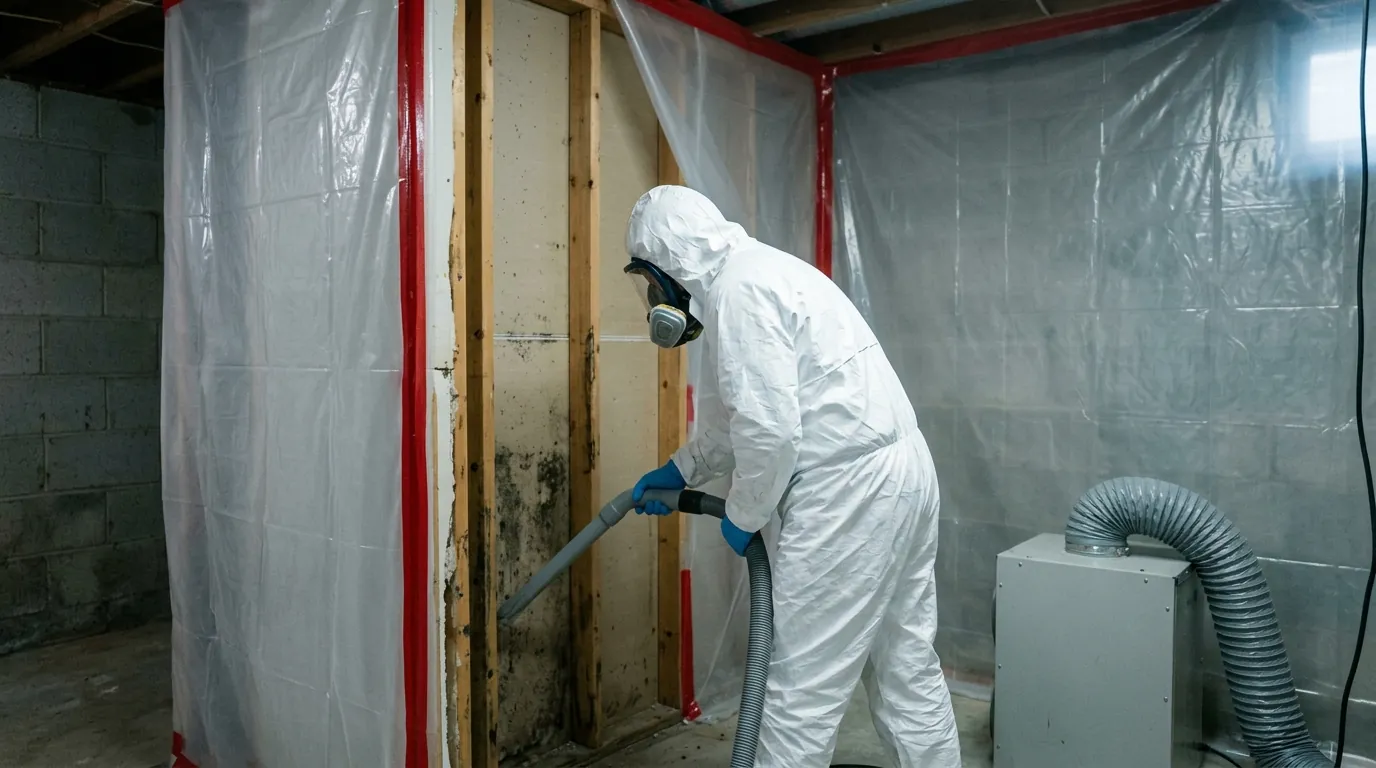
Mold remediation is not the same as mold removal — a distinction that matters when you’re dealing with a significant colony rather than a small surface spot. Remediation addresses the full scope: physical containment to prevent cross-contamination, controlled demolition of unsalvageable materials (drywall, insulation, subfloor sections), HEPA-filtered air scrubbing to capture airborne spores, and antimicrobial treatment of structural surfaces. The work is done under negative air pressure, meaning air inside the containment zone is continuously exhausted through HEPA filtration rather than allowed to migrate into clean areas of the home.
Timelines vary with the size and depth of the infestation. A contained bathroom wall affected by a slow supply-line leak might be resolved in one to two days. A crawl space with years of undetected moisture intrusion — common in older ranch-style homes throughout Butler County — can require a week or more of phased work. The goal at the end of every project is a clearance air sample that confirms spore concentrations are at or below outdoor baseline levels.
Our process
-
Site assessment and moisture mapping. Before any physical work begins, the source of the moisture that fed the mold must be identified and confirmed as resolved. We use thermal imaging and moisture meters to map the full extent of affected materials — including areas that look dry but are still holding moisture inside the assembly.
-
Containment setup. Polyethylene sheeting and negative air pressure machines isolate the work zone from the rest of the structure. This step is non-negotiable on any project involving more than a small surface area. Without proper containment, remediation work stirs up spores and spreads contamination to unaffected rooms.
-
Controlled demolition and material removal. Porous materials that have been colonized — drywall, insulation batts, carpet, wood framing in some cases — are bagged and removed from the containment zone in sealed, labeled bags. Structural wood that is salvageable is wire-brushed, HEPA-vacuumed, and treated with an EPA-registered antimicrobial agent.
-
HEPA air scrubbing. Air scrubbers run continuously throughout the project and for a defined period after demolition is complete. This captures the fine particulate that physical removal alone cannot address. On larger projects, multiple units are staged to achieve sufficient air changes per hour for the containment volume.
-
Clearance testing. A post-remediation air sample — collected after containment is still in place but work is complete — confirms that spore counts have returned to acceptable levels. This documentation matters for insurance claims and for any future buyer’s inspection of the property.
What separates a good mold response from a bad one
The most common mistake in residential mold abatement is treating visible growth without addressing hidden colonization. Mold inside wall cavities rarely shows itself until the colony is well established. Cutting an inspection port and shining a flashlight in is not the same as thermal imaging and moisture mapping the full assembly.
A second failure point is inadequate containment. Some operators skip negative air pressure on smaller jobs to save setup time. Without it, the HVAC system can distribute spores throughout the house during the work — creating a much larger problem than the original one.
Insurance adjusters reviewing mold claims look for a few specific items: documentation of the moisture source and confirmation it has been corrected, a written scope of work that distinguishes affected from unaffected materials, pre- and post-remediation air sample results, and photographs of containment setup and material removal. Missing any of these can delay or reduce a claim settlement. We document each phase of the project with the adjuster’s checklist in mind.
Black mold remediation — specifically Stachybotrys chartarum — gets significant attention, but the remediation protocol is driven by the extent and location of growth, not solely by species. Any significant mold colony in a living space warrants the same containment and clearance process regardless of color.
Seasonal and regional considerations
Western Pennsylvania’s climate creates predictable mold pressure windows. Humid summers combined with older housing stock — a lot of Cranberry Township and the surrounding Butler County communities include homes built before modern vapor barrier standards — mean crawl spaces and rim joists are perennial problem areas. The freeze-thaw cycles of late winter and early spring drive ice dam moisture into attic assemblies, and that moisture often isn’t discovered until warmer weather arrives and the smell becomes noticeable. Spring flooding along local creek corridors can saturate below-grade spaces quickly. If your home experienced any water intrusion in the past 30 to 60 days and you haven’t had a moisture assessment, mold colonization is a real possibility even if nothing is visible yet.
Service area
FireDEX Butler serves Cranberry Township and the surrounding region, including Mars, Zelienople, Wexford, Valencia, Evans City, and communities throughout Butler and Allegheny counties. City-specific pages for mold remediation in each area link back here for full process detail.
If you’re seeing discoloration, smelling something musty, or you’ve had a water event in the past two months, the right next step is an air quality assessment — not a wait-and-see approach. Call (724) 452-7400 to request yours.
Frequently Asked Questions
What level of mold growth requires full containment with negative air pressure, versus a simpler cleanup approach?
What does a post-remediation clearance test actually measure, and why does it matter?
Can mold come back after professional remediation?
How should I handle a mold discovery while waiting for a remediation crew to arrive?
Does homeowners insurance typically cover mold remediation, and what documentation do adjusters require?
Looking for the best mold remediation company in Cranberry Township?
FireDEX Butler provides licensed and insured mold remediation in Cranberry Township, PA and the surrounding area, and has served local property owners since 1981. We answer calls 24/7 — call (724) 452-7400 for immediate help.
Need Mold Remediation now?
We respond 24/7 across Cranberry Township and surrounding PA cities.
Related Coverage
- Our Restoration Services
- Contact FireDEX Butler
- Mold Remediation in Beaver Falls
- Mold Remediation in Butler
- Mold Remediation in Cranberry Township
- Mold Remediation in Evans City
- Mold Remediation in Gibsonia
- Mold Remediation in Mars
- Mold Remediation in Seven Fields
- Mold Remediation in Wexford
- Mold Remediation in Zelienople
- How To Choose a Restoration Company in (Without Getting Burned)
- How To Test for Mold in Your Home (DIY Kits vs a Pro Inspection)
- 7 Signs You Have Hidden Mold (and What To Do Next)