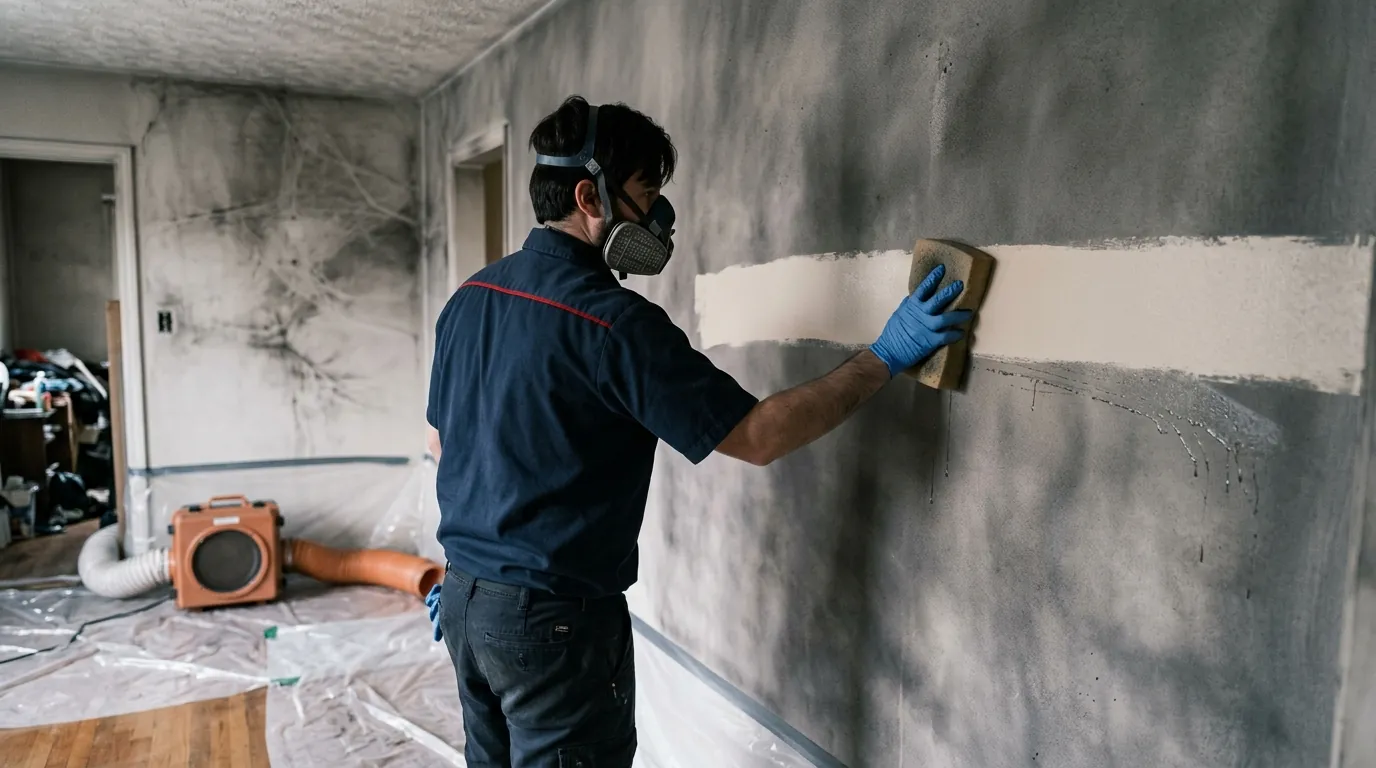
Smoke Damage Restoration in Butler
24/7 smoke damage restoration in Butler, PA. Insurance billing accepted. Call (724) 452-7400.
Our technicians are dispatched from our Cranberry Township, PA headquarters and are typically on-site in Butler within 60 minutes of your call.
The older frame homes and brick foursquares that line Institute Hill and Lyndora carry a specific fire risk that newer construction doesn’t: original cast-iron flue stacks, knob-and-tube wiring, and decades of accumulated wood trim that ignite fast and smolder long after the flames are out. When a house fire happens in Butler, the smoke doesn’t just drift through rooms — it pressurizes into wall cavities, saturates plaster lath, and settles into the kind of dense, oily residue that reactivates every time humidity rises off Connoquenessing Creek. FireDEX Butler has been working these streets since 1981, and we answer calls around the clock.
Why Butler Properties See Elevated Smoke Damage
Butler County’s housing stock tells the story. Most homes in the 16001 and 16002 ZIP codes were built before 1950, and many of them were never rewired or replumbed. Fuse-panel electrical systems overheat quietly; cast-iron chimney liners crack and allow combustion gases to migrate into framing. When those systems fail, fires tend to burn longer before detection, which means more smoke penetration per square foot of living space.
The materials themselves compound the problem. Horsehair plaster — still common on Institute Hill and in East Butler — is porous in a way modern drywall isn’t. Smoke particles and acidic soot embed deeper into plaster surfaces and take longer to neutralize. Original hardwood floors and old-growth pine framing absorb odor compounds that standard surface cleaning won’t reach. What looks like a contained kitchen fire can leave smoke residue in every closet on the second floor.
Our Smoke Damage Restoration Process in Butler
The first thing we do on any smoke job is document — photographs, moisture readings, air quality samples — before a single surface is touched. That documentation protects your insurance claim and gives us a baseline for measuring when the structure is genuinely clean, not just visually acceptable.
From there, the process follows a specific sequence:
- Containment and ventilation — negative air pressure systems pull smoke-laden air out of the structure while preventing cross-contamination to unaffected rooms.
- Dry soot removal — chemical sponges and HEPA vacuuming lift loose carbon particles from walls, ceilings, and contents before any wet cleaning begins. Wetting soot before dry removal drives it deeper into porous surfaces.
- Chemical neutralization — alkaline smoke residue from wood fires requires acid-side neutralizers; protein smoke from kitchen fires needs enzyme-based treatments. Older Butler homes often present both in the same loss.
- Thermal fogging and hydroxyl treatment — for deep odor penetration in plaster walls and original hardwood, we use thermal fogging to carry deodorizing agents into the same pores the smoke reached.
- Clearance verification — we don’t close a job based on smell alone. Air quality readings confirm particulate levels have returned to pre-loss baselines.
Reaching Butler from Cranberry Township
FireDEX Butler’s base in Cranberry Township puts us on Route 228 or I-79 North to reach Butler city limits in well under half an hour under normal conditions. We know the steep hillside streets around the Butler County Courthouse and the tight residential blocks near Butler Memorial Hospital that can slow an unfamiliar crew in winter — we’ve navigated them in ice and in the dark. Because we operate 24/7, a call at 2 a.m. after a kitchen fire gets the same crew response as a call at noon.
For commercial losses along the Main Street business district or the hospital corridor, we coordinate staging and access in advance to avoid blocking loading zones or emergency lanes — those blocks don’t have the shoulder room that suburban sites do.
Butler Insurance Coordination
Smoke damage claims in Butler frequently involve older homes where replacement cost and actual cash value diverge significantly — a 1920s foursquare with original millwork costs far more to restore than a standard depreciation schedule suggests. We document every affected material category in detail: plaster square footage, original hardwood species, built-in cabinetry, cast-iron fixtures. That level of documentation gives your adjuster a defensible line-item scope rather than a lump-sum estimate that typically gets cut.
We work directly with most major carriers and can communicate with your adjuster throughout the process so you’re not translating between a restoration crew and an insurance office while you’re already dealing with displacement.
Local Note
One thing that surprises homeowners in Lyndora and the older blocks of East Butler: smoke odor that seems to disappear in the first week often returns in late spring when indoor humidity climbs. Plaster walls release absorbed odor compounds as moisture content rises — the same physics that makes those walls slow to dry after a water loss. If a smoke job was cleaned to surface standards only, without deep neutralization of the substrate, you’ll smell it again by May. We’ve re-treated work done by other contractors on exactly this pattern more than once. The fix at that point is more involved than doing it correctly the first time.
If your home in Butler has been through a fire — even a small one — call FireDEX Butler at (724) 452-7400. We’ll assess the full scope of smoke penetration, not just what’s visible, and give you a clear picture of what restoration actually requires for a pre-1950 Western PA home.
Smoke Damage Restoration in Butler: Service Coverage
Frequently Asked Questions
How fast can you arrive for smoke damage restoration in Butler?
How quickly can FireDEX Butler reach Institute Hill or Lyndora after a fire?
Are the older homes near Downtown Butler harder to clean after smoke damage?
Will smoke odor come back in a Butler home after it's been cleaned?
What's the difference between smoke residue from a wood fire and a kitchen fire, and does it matter for cleanup?
How does FireDEX Butler document smoke damage for insurance claims on older Butler properties?
Smoke Damage Restoration response in Butler
Most Butler calls see a technician on-site within 60 minutes from our Cranberry Township headquarters.