Biohazard and Trauma Cleanup in Cranberry Township
24/7 biohazard and trauma cleanup in Cranberry Township and surrounding areas. Insurance billing accepted. Call (724) 452-7400.
When something traumatic happens inside a home or property, the people closest to it shouldn’t have to think about cleanup. Whether it’s an unattended death discovered days later, a traumatic injury, or another biohazard event, biological contamination doesn’t wait — and improper handling can spread pathogens, compromise structural materials, and create liability for property owners. This is work that requires specialized training, regulated disposal, and a team that understands the weight of what they’re walking into.
What biohazard and trauma cleanup actually involves
Biohazard remediation is not cleaning in the conventional sense. Blood, bodily fluids, and decomposition byproducts are classified as potentially infectious materials under OSHA’s Bloodborne Pathogen Standard (29 CFR 1910.1030). That means every surface contact, every tool used, and every material removed must be handled under strict protocols — not just for the property, but for the safety of the technicians on-site.
The work typically involves personal protective equipment staged before entry, physical removal of contaminated porous materials (flooring, subfloor, drywall, insulation), enzymatic and EPA-registered disinfectant treatment of affected surfaces, and the proper packaging and transport of regulated medical waste under a documented waste manifest. Odor from biological contamination — particularly in unattended death situations — penetrates deeply into building materials and requires targeted treatment beyond surface-level cleaning.
Timeline depends on the scope. A contained trauma scene may be remediated in a single day. A decomposition event that has affected subfloor or wall cavities can take two to three days once affected materials are removed and the structure is properly treated and dried. FireDEX Butler responds 24/7 and can typically begin work the same day you call.
Our process
-
Arrival and scene assessment — Before any work begins, a technician evaluates the full extent of contamination, including secondary areas that may not be immediately visible (HVAC pathways, adjacent wall cavities, under-floor spaces). We establish a containment perimeter and confirm that the site is cleared for remediation by the appropriate authorities if applicable.
-
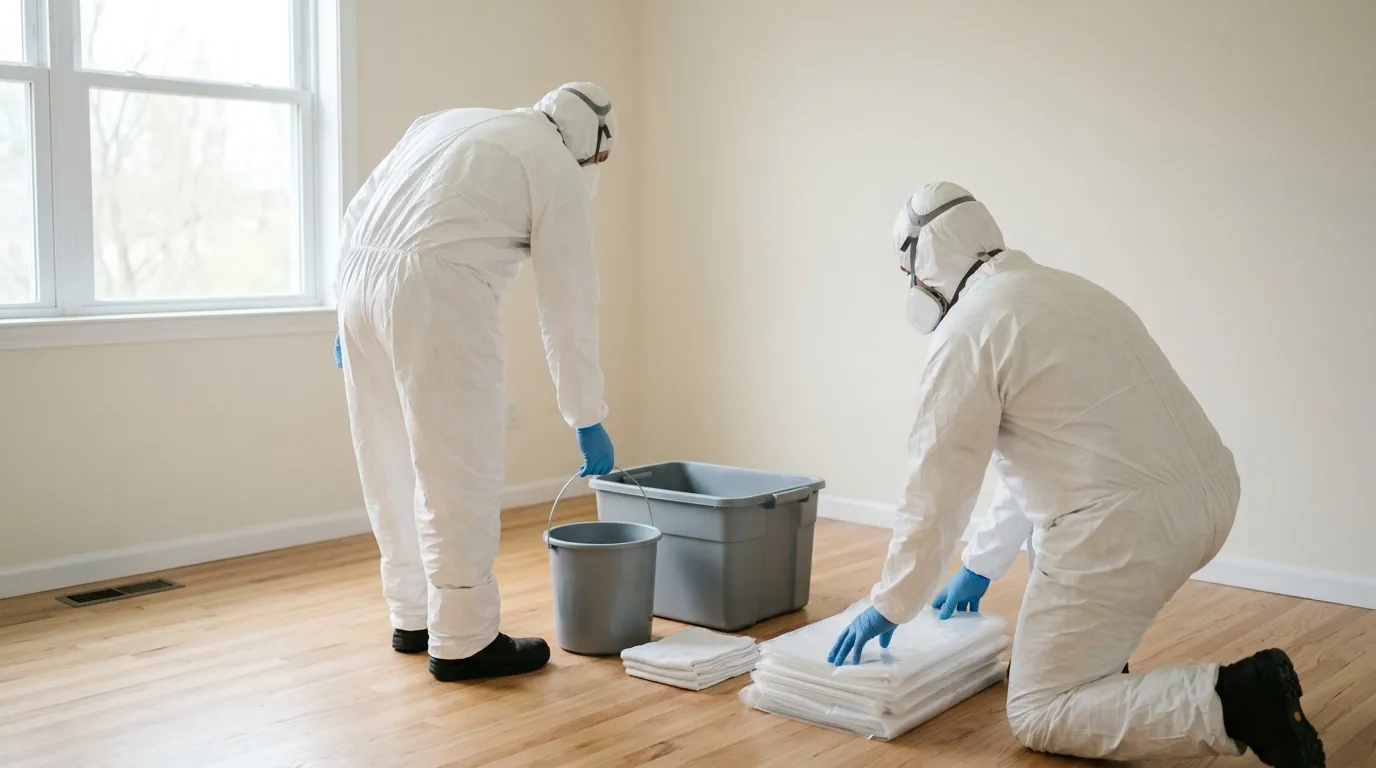
PPE staging and containment setup — Technicians suit up in full PPE — Tyvek suits, respirators, gloves, and eye protection — before entering the affected area. Containment barriers prevent cross-contamination to unaffected areas of the property during the removal process.
-
Biohazard removal and material disposal — Contaminated materials are removed, double-bagged in regulated biohazard containers, and labeled per DOT and state transport requirements. In Pennsylvania, biohazard waste transport requires proper manifesting; FireDEX Butler holds license #PA001913 and manages this documentation so the property owner is not left holding unresolved regulatory paperwork.
-
Enzymatic treatment and EPA-registered disinfection — After physical removal, affected surfaces are treated with enzymatic cleaners that break down biological proteins at a molecular level, followed by EPA-registered hospital-grade disinfectants. This step addresses both pathogen risk and the odor compounds that surface cleaning alone cannot eliminate.
-
Post-remediation verification and documentation — We conduct a final walkthrough, photograph treated areas, and provide written documentation of the remediation scope. This documentation matters for insurance claims and for any future property transactions.
What separates a good biohazard response from a bad one
The most common failure in trauma scene cleanup is incomplete removal of porous materials. Blood and biological fluids wick quickly into hardwood, concrete, drywall, and subfloor — materials that look unaffected on the surface can harbor contamination inches deep. Technicians who stop at visible staining leave behind both a pathogen risk and an odor source that will resurface, particularly in warm weather.
A second common gap is odor treatment. Masking agents and standard deodorizers don’t address the volatile organic compounds produced by biological decomposition. Proper remediation uses enzymatic digestion and, in severe cases, hydroxyl or ozone treatment to neutralize odor at the molecular level rather than covering it.
From an insurance documentation standpoint, adjusters handling biohazard claims look for a clear scope of work, photographic evidence of affected areas before and after remediation, a waste manifest confirming proper disposal, and itemized line items for materials removed. Undocumented or incomplete remediation can create disputes at claim time — or worse, leave a property owner with a liability issue if contamination is discovered later.
Discreet arrival matters too. FireDEX Butler uses unmarked vehicles on request, understanding that neighbors and passersby don’t need to know what happened inside a home.
Seasonal and regional considerations
In western Pennsylvania, temperature plays a real role in biohazard response urgency. During summer months, decomposition accelerates significantly in unventilated spaces — what might be a contained remediation in cooler weather can become a more extensive structural issue if response is delayed even 24–48 hours. Conversely, cold winters can slow decomposition but also mask odor until a property is heated, at which point the full extent of contamination becomes apparent.
Older housing stock in Butler County and the surrounding townships — much of it built before 1980 — can complicate remediation when lead paint or asbestos-containing materials are disturbed during the removal of contaminated structural components. This is a factor worth discussing during the initial assessment.
Service area
FireDEX Butler is based in Cranberry Township and provides biohazard and trauma cleanup throughout Butler County and the surrounding region, including Butler City, Mars, Zelienople, Harmony, Evans City, Saxonburg, and into the northern Pittsburgh suburbs. Response is available around the clock.
If you’re dealing with a situation that requires biohazard or trauma scene cleanup, the next step is a confidential conversation — not a commitment. Call FireDEX Butler at (724) 452-7400 to speak with someone who can walk you through what to expect, answer questions about insurance coordination, and dispatch a team when you’re ready to begin discreet biohazard cleanup.
Frequently Asked Questions
What does "regulated biohazard waste" mean, and how is it disposed of in Pennsylvania?
How do technicians determine whether subfloor or wall materials need to be removed?
Will the property smell normal after remediation is complete?
Can the property be reoccupied immediately after biohazard cleanup is finished?
How is privacy handled — will neighbors or building occupants know what happened?
Looking for the best biohazard and trauma cleanup company in Cranberry Township?
FireDEX Butler provides licensed and insured biohazard and trauma cleanup in Cranberry Township, PA and the surrounding area, and has served local property owners since 1981. We answer calls 24/7 — call (724) 452-7400 for immediate help.
Need Biohazard and Trauma Cleanup now?
We respond 24/7 across Cranberry Township and surrounding PA cities.
Related Coverage
- Our Restoration Services
- Contact FireDEX Butler
- Biohazard and Trauma Cleanup in Beaver Falls
- Biohazard and Trauma Cleanup in Butler
- Biohazard and Trauma Cleanup in Cranberry Township
- Biohazard and Trauma Cleanup in Evans City
- Biohazard and Trauma Cleanup in Gibsonia
- Biohazard and Trauma Cleanup in Mars
- Biohazard and Trauma Cleanup in Seven Fields
- Biohazard and Trauma Cleanup in Wexford
- Biohazard and Trauma Cleanup in Zelienople