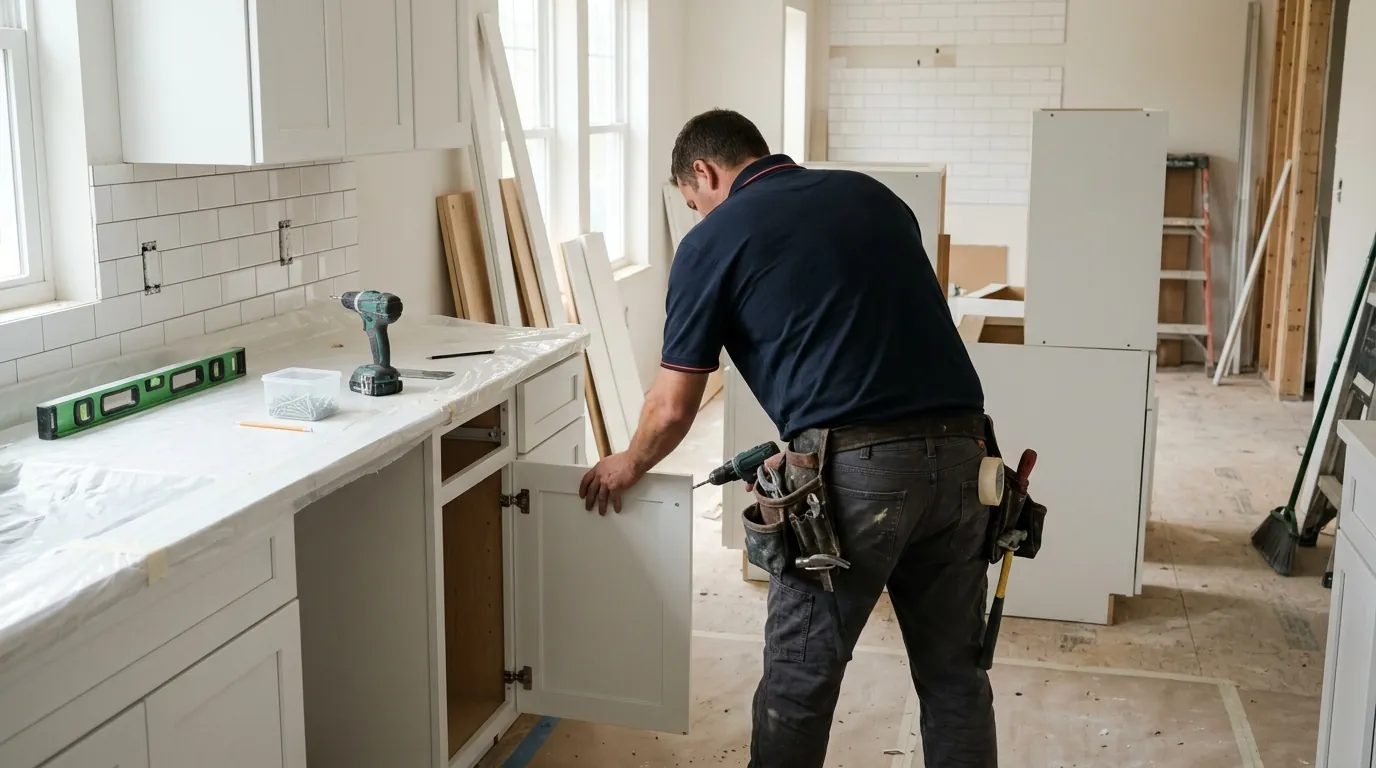
Renovations, Remodels and General Contracting in Cranberry Township
24/7 renovations, remodels and general contracting in Cranberry Township and surrounding areas. Insurance billing accepted. Call (724) 452-7400.
What Renovations, Remodels and General Contracting actually involves
You’ve already been through the hard part — the water damage, the fire, the mold, or simply decades of deferred maintenance finally catching up with a kitchen that no longer works for your family. What comes next shouldn’t feel like starting over with a stranger. Renovation and remodeling work after a loss, or as a planned upgrade, requires a contractor who understands both the cosmetic finish you want and the structural reality underneath the drywall. That gap — between what a space looks like and what it actually needs — is where projects go sideways.
General contracting at this level means coordinating every trade: framing, insulation, drywall, tile, cabinetry, electrical rough-ins, plumbing tie-ins, painting, and finish carpentry. A kitchen remodel in a 1980s Cranberry Township colonial may uncover galvanized supply lines that need replacement before a single cabinet goes in. A bathroom remodel in a newer townhome might require a permit from the municipality before a single tile is pulled. Knowing what’s behind the wall before you open it — and having the relationships with licensed subcontractors to handle what you find — is what separates a general contractor from a handyman with a truck.
Timelines vary with scope. A bathroom remodel typically runs two to four weeks from demo to final punch-list. A full kitchen gut-and-rebuild with structural changes can run six to ten weeks depending on cabinet lead times and permit review. Post-damage rebuilds add coordination with insurance adjusters and supplement requests into that schedule. Every project gets a written scope of work before a single tool comes out.
Our process
-
Scope of work and estimate — Before any work begins, a project manager walks the space with you, documents existing conditions with photographs and measurements, and produces a line-item written estimate. For post-damage projects, this document also serves as the basis for your insurance claim supplement if the adjuster’s initial estimate is short.
-
Permit pulling and scheduling — Depending on the municipality — Cranberry Township, Adams Township, Mars Borough, or elsewhere in Butler County — permits may be required for structural changes, electrical work, or plumbing modifications. We handle permit applications and schedule inspections so you don’t have to navigate the township building department on your own.
-
Demolition and rough-in — Demo is controlled and systematic, not destructive. Materials are separated for disposal or salvage, and any hidden conditions — rot, outdated wiring, inadequate insulation, previous water intrusion — are documented and addressed before walls close back up. Rough-in work for electrical, plumbing, and HVAC is completed and inspected before insulation and drywall.
-
Finish installation — Drywall, tile, flooring, cabinetry, countertops, fixtures, and trim are installed in the correct sequence to avoid rework. Subcontractors are scheduled in coordination so the project doesn’t sit idle waiting on a single trade.
-
Final walk-through and punch-list — Before we consider a project complete, we walk every room with you and document any items that need adjustment. Paint touch-ups, hardware alignment, grout sealing, fixture function — nothing gets signed off until you’re satisfied.
What separates a good renovation response from a bad one
The most common failure point in residential renovation isn’t the finish work — it’s what happens before the walls close. Contractors who skip or rush the rough-in inspection phase create problems that surface years later: moisture intrusion behind new tile because the waterproofing membrane was applied incorrectly, electrical circuits that trip under normal load because the panel wasn’t evaluated before adding circuits, or cabinets that rack and gap because the subfloor wasn’t leveled before installation.
For post-damage rebuilds specifically, insurance adjusters write initial estimates based on visible damage. An experienced general contractor knows to look further — at structural members that absorbed smoke or water, at insulation that tested dry on the surface but holds moisture at the batt, at subfloor panels that passed a visual check but deflect under foot traffic. Supplementing the adjuster’s estimate with documented findings from the rough-in phase is standard practice on a well-run rebuild, not an exception.
Permit compliance is another dividing line. Work done without required permits can complicate a future home sale, void a homeowner’s insurance policy, or require costly tear-out if discovered during inspection. Licensed general contractors (#PA001913) pull permits because it protects the homeowner, not just the contractor.
Seasonal and regional considerations
Western Pennsylvania’s freeze-thaw cycle affects renovation timing in ways that aren’t always obvious. Exterior work — siding, roofing, foundation repairs tied to a remodel — has a narrower scheduling window than interior projects. Starting a bathroom or kitchen remodel in late fall is often strategic: interior trades work regardless of weather, and the project can be complete before spring exterior work season drives up subcontractor demand and lead times.
Butler County’s housing stock skews toward homes built between the 1950s and 1990s. That era of construction means lead paint and asbestos-containing materials are a realistic finding in older homes in Cranberry Township, Mars, Zelienople, and surrounding communities. Any renovation disturbing surfaces in a pre-1978 home requires awareness of lead-safe work practices. When those materials are identified, abatement is handled before renovation proceeds.
Service area
FireDEX Butler operates out of Cranberry Township and handles renovation, remodeling, and general contracting projects across Butler County and the surrounding region — including Mars, Zelienople, Butler City, Adams Township, Evans City, and Harmony. If you’re not sure whether your address falls within our project range, call (724) 452-7400 and we’ll tell you directly.
If your renovation follows a water, fire, or mold loss, ask about our full-service restoration-to-rebuild path — one point of contact from emergency response through finished space.
Ready to move from damaged or outdated to finished and functional? Call (724) 452-7400 to schedule a project walk-through and get a written scope of work for your renovation or remodel.
Frequently Asked Questions
What's included in a written scope of work, and why does it matter for a post-damage rebuild?
Which renovation projects in Cranberry Township require a building permit, and what happens if work is done without one?
How do you handle lead paint or asbestos discovered during a kitchen or bathroom remodel in an older home?
What's a realistic timeline for a kitchen remodel, and what causes projects to run long?
Can a general contractor manage a renovation that involves multiple trades, or do I need to hire each subcontractor separately?
Looking for the best renovations, remodels and general contracting company in Cranberry Township?
FireDEX Butler provides licensed and insured renovations, remodels and general contracting in Cranberry Township, PA and the surrounding area, and has served local property owners since 1981. We answer calls 24/7 — call (724) 452-7400 for immediate help.
Need Renovations, Remodels and General Contracting now?
We respond 24/7 across Cranberry Township and surrounding PA cities.
Related Coverage
- Our Restoration Services
- Contact FireDEX Butler
- Renovations, Remodels and General Contracting in Beaver Falls
- Renovations, Remodels and General Contracting in Butler
- Renovations, Remodels and General Contracting in Cranberry Township
- Renovations, Remodels and General Contracting in Evans City
- Renovations, Remodels and General Contracting in Gibsonia
- Renovations, Remodels and General Contracting in Mars
- Renovations, Remodels and General Contracting in Seven Fields
- Renovations, Remodels and General Contracting in Wexford
- Renovations, Remodels and General Contracting in Zelienople