Soot Removal in Butler
24/7 soot removal in Butler, PA. Insurance billing accepted. Call (724) 452-7400.
Our technicians are dispatched from our Cranberry Township, PA headquarters and are typically on-site in Butler within 60 minutes of your call.
The cast-iron flues and knob-and-tube wiring still found in many Institute Hill and Lyndora homes were never designed for modern appliance loads, and when they fail, the fires they produce burn hot and dirty. Soot from those fires — especially the oily, protein-heavy residue that clings to plaster walls and unpainted woodwork — doesn’t wipe off. It smears, it penetrates, and within 72 hours it begins etching surfaces that could otherwise be saved. If you’re searching for soot removal in Butler after a kitchen fire, a chimney flare-up, or a furnace puff-back, the clock is already running.
Why Butler Properties See Heavier Soot Damage
Butler’s housing stock is older than the state average. The brick foursquares and frame two-stories that line the streets above Downtown Butler and through East Butler were built before 1950, and most still have their original interior finishes — horsehair plaster, oil-based trim paint, and bare wood millwork. These materials are porous in a way that modern drywall simply isn’t. When a fire produces smoke, those surfaces pull soot deep into the substrate rather than leaving it sitting on the face. A standard wipe-down that works on a 2005 subdivision home will drive the residue further into a 1920s plaster wall.
The original cast-iron chimney stacks common in these neighborhoods also contribute. Creosote and carbon accumulate inside them over decades, and a chimney fire or a hard puff-back can push a dense, tar-like soot cloud through every room on the flue line — sometimes reaching floors that show no other fire damage at all. The smell alone can make a home unlivable.
Our Soot Removal Process in Butler
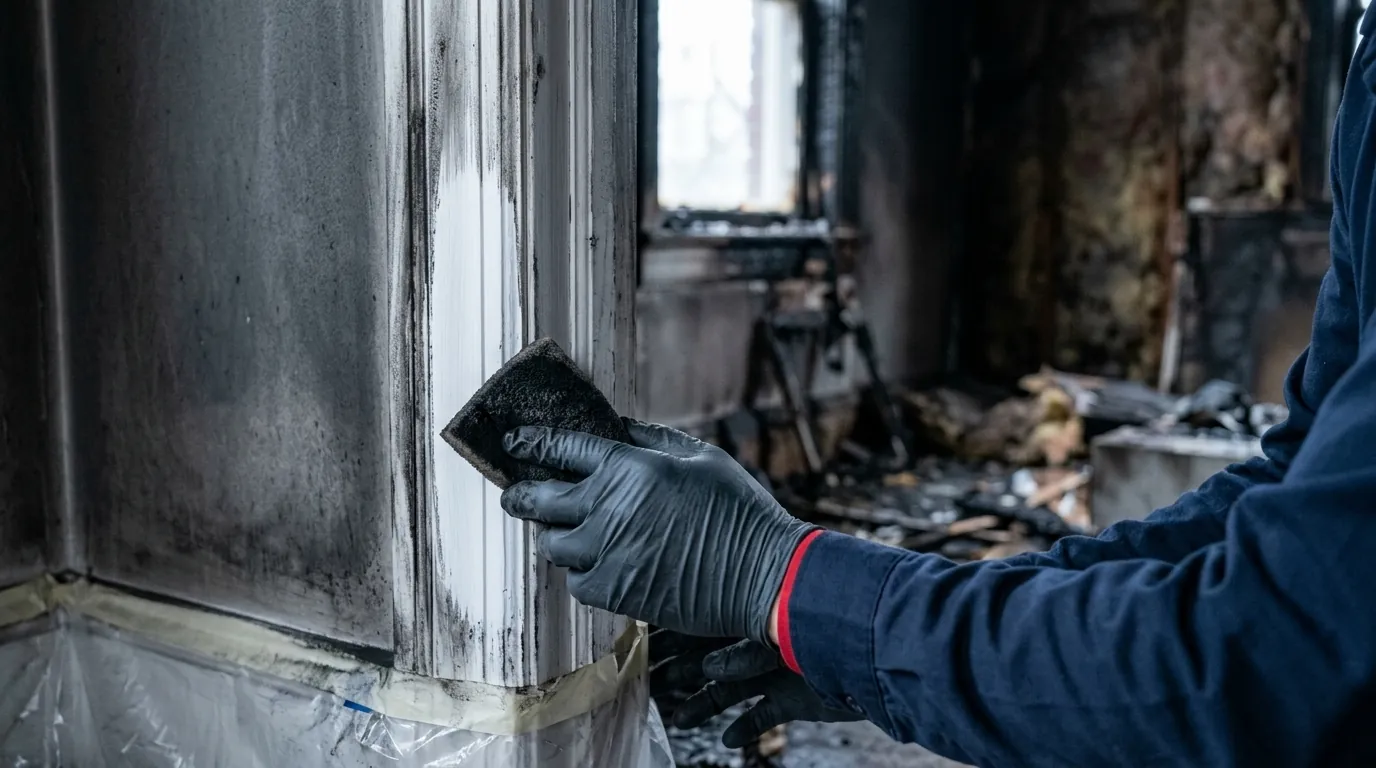
The first thing we do on-site is identify what burned. Synthetic materials — insulation, wiring jacketing, upholstery foam — leave a dry, powdery soot that responds to dry-sponge methods. Protein fires (cooking oils, food) leave an almost invisible oily film that smells strongly and requires enzymatic or alkaline cleaners. Wood and paper fires produce a mix. Butler’s older homes frequently present all three types in a single loss because the structure itself — wood framing, old insulation, original wiring — becomes fuel.
Once we’ve characterized the residue, we establish containment to prevent cross-contamination to unaffected rooms, then work from the ceiling down: structural cavities and HVAC ducts first, then walls and trim, then floors and contents. On plaster surfaces we use pH-appropriate chemical sponges and low-moisture cleaning agents to avoid saturating the substrate. Porous brick — common on exterior-facing interior walls in Butler County’s older commercial blocks near the Main Street business district — gets a different treatment than painted drywall. We document every surface before and after, which your insurance adjuster will need.
Reaching Butler from Cranberry Township
FireDEX Butler operates around the clock and is based in Cranberry Township, roughly 15 miles south of Butler via Route 228 and PA-8. That route stays passable in most weather, though the steep hillside streets feeding into Institute Hill and the neighborhoods north of Butler Memorial Hospital can ice over quickly in a Western PA winter. Our crews know those grades — it’s not the same as dispatching from a distant regional hub and mapping it for the first time at 2 a.m. For addresses in the 16001 and 16002 ZIP codes, we can typically have equipment staged and work started well ahead of the window when soot begins permanently bonding to surfaces.
Insurance Documentation for Butler Fire Losses
Most homeowners’ policies in Pennsylvania cover soot and smoke damage as part of a fire loss, but the documentation requirements matter. Adjusters want itemized surface-by-surface records, not a single line-item estimate. We photograph affected materials before any cleaning begins, log the cleaning methods and products used on each surface type, and provide a written scope that maps directly to the insurance industry’s Xactimate line items. If your carrier sends an independent adjuster — common on larger losses in Butler County — having that documentation ready shortens the supplement process significantly. We bill carriers directly whenever possible so you’re not managing reimbursement out of pocket.
Local Note
One thing that surprises homeowners in Lyndora and the older sections of Butler Township: plaster walls don’t just absorb soot — they hold odor compounds differently than drywall does. The lime and gypsum matrix in horsehair plaster can off-gas smoke smell for weeks after visible residue is cleaned, especially in humid conditions. Western PA summers are humid, and Butler sits in a river valley that traps moisture. We account for this by treating plaster surfaces with an odor-encapsulating sealant after cleaning, rather than assuming the smell will resolve on its own. Skipping that step is the most common reason a soot job has to be revisited.
If your home or business in Butler has soot residue from any kind of fire — whether it’s a contained kitchen incident or a loss that involved the fire department — call FireDEX Butler at (724) 452-7400. We’ll assess the damage, explain what can be cleaned versus what needs replacement, and start the documentation your insurance company will require.
Soot Removal in Butler: Service Coverage
Frequently Asked Questions
How fast can you arrive for soot removal in Butler?
How quickly can FireDEX Butler reach a home in Institute Hill or Lyndora after a fire?
Does the age of Butler's housing stock affect how soot removal is done?
Butler's older homes often have original cast-iron chimney stacks — does a chimney fire or puff-back require different soot cleanup?
Will my Butler homeowner's insurance cover soot and smoke damage, and how does FireDEX handle the claim?
After soot cleaning is done, why does a Butler home sometimes still smell like smoke weeks later?
Soot Removal response in Butler
Most Butler calls see a technician on-site within 60 minutes from our Cranberry Township headquarters.