Odor Removal and Deodorization in Cranberry Township
24/7 odor removal and deodorization in Cranberry Township and surrounding areas. Insurance billing accepted. Call (724) 452-7400.
You can repaint the walls, replace the carpet, and scrub every surface — and the smell still comes back the moment the house warms up. That’s because smoke, fire, and biological odors don’t just sit on surfaces; they penetrate drywall, subflooring, HVAC ductwork, and the structural cavities behind your walls. Surface cleaning alone doesn’t reach them. Professional odor removal works at the molecular level, neutralizing odor compounds where they’ve actually settled rather than masking them with fragrance.
What odor removal and deodorization actually involves
Odor molecules bond to porous materials — wood framing, insulation, concrete block, upholstery foam, even the paper facing on drywall. The source of the odor determines how deeply it has penetrated and which treatment technology will break the chemical bond.
Smoke odor from a structure fire involves two distinct residue types that behave very differently. Protein smoke (from cooking fires, small kitchen fires) leaves an almost invisible film that carries an intense, acrid smell and bonds aggressively to painted surfaces. Synthetic smoke (burning plastics, electrical fires, manufactured materials) produces a thick, oily soot that embeds in porous materials and requires a different cleaning chemistry entirely. Misidentifying the soot type is one of the most common reasons odor returns after a DIY or under-equipped cleanup.
Beyond fire, professional deodorization handles pet urine that has wicked into subfloor OSB, musty odors from long-term moisture intrusion, cigarette smoke that has polymerized onto surfaces over years, and sewage or biohazard odors that require enzymatic treatment before any deodorization equipment is effective.
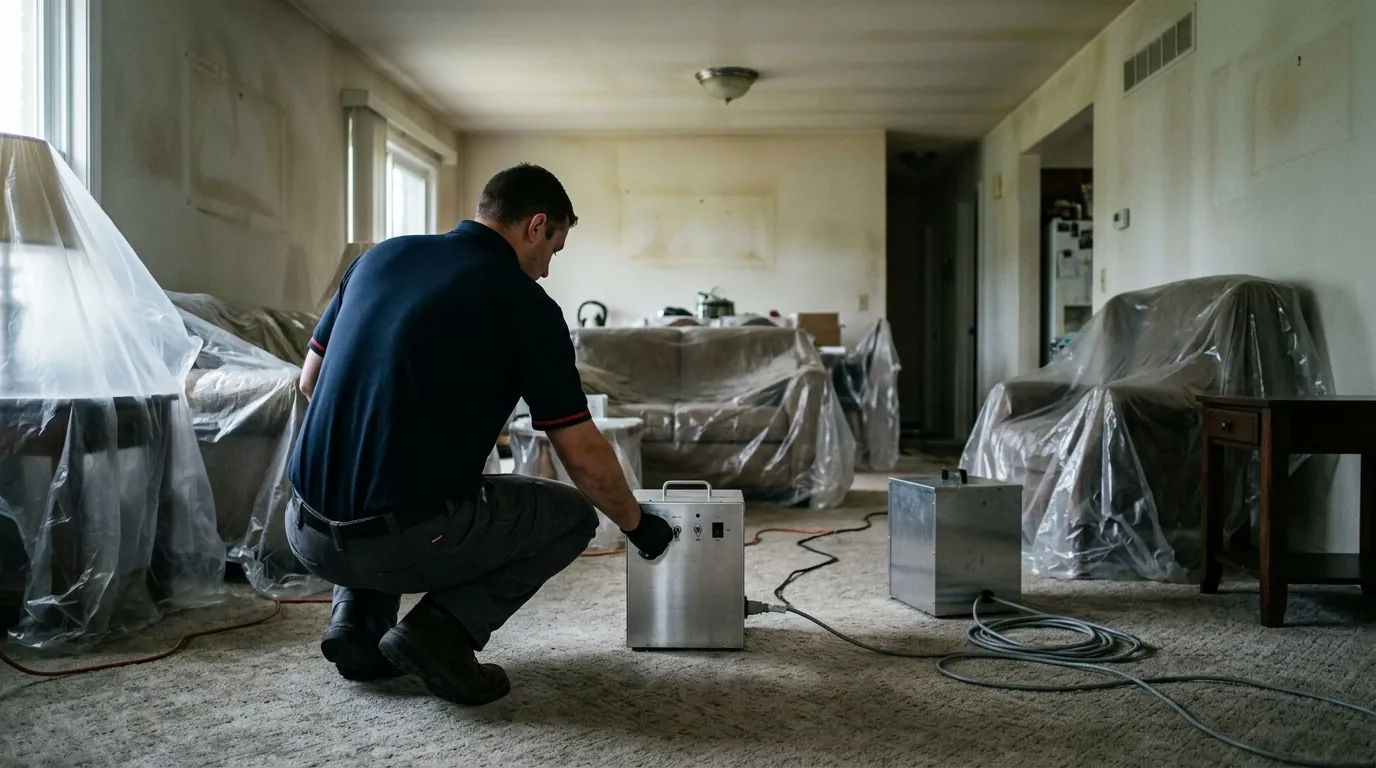
The equipment side includes thermal fogging machines that vaporize deodorizing solution into particles small enough to follow the same pathways smoke traveled — reaching inside wall cavities and ductwork. Hydroxyl generators produce hydroxyl radicals that oxidize and break apart odor molecules in the air and on surfaces, and can run safely in occupied or partially occupied spaces. Ozone treatment drives ozone (O₃) through a structure at high concentration to oxidize odor compounds at their source — highly effective on embedded smoke odor, but requiring the space to be vacated during treatment and properly ventilated afterward.
A full deodorization project typically runs one to four days depending on the size of the structure, the severity of the odor source, and how many treatment cycles are needed for confirmation.
Our process
-
Odor source identification and material assessment. Before any equipment is deployed, the technician walks the structure to locate every odor source — not just the obvious ones. Smoke in an HVAC system will re-contaminate a cleaned space every time the furnace runs. Pet urine under a floating floor will off-gas through the new surface layer. The assessment determines which materials need cleaning, which need removal, and which can be treated in place.
-
Source removal and surface preparation. Deodorization equipment cannot neutralize an active source. Charred materials, saturated subflooring, and heavily contaminated soft goods are removed or cleaned before treatment begins. HVAC filters are replaced and duct surfaces are addressed to prevent re-contamination after the structure is treated.
-
Primary treatment — thermal fogging or hydroxyl, matched to the odor type. For smoke and fire odors, thermal fogging is deployed to penetrate the same structural pathways the smoke traveled. For biological odors or situations where occupants need re-entry sooner, hydroxyl generators run continuously and can overlap with other work. The treatment method is selected based on the odor source, not defaulted to whatever equipment is on the truck.
-
Ozone shock treatment where indicated. For severe smoke odor or cases where fogging alone hasn’t reached embedded residue, an ozone treatment cycle is run with the structure sealed and vacated. Ozone concentration and dwell time are calculated based on the cubic footage of the space and the severity of contamination — not a one-size timer.
-
Post-treatment verification and clearance. The technician re-enters after ventilation and does a systematic walk-through, including enclosed spaces like closets, crawlspaces, and mechanical rooms. If any odor signature remains, the source is re-investigated rather than running another treatment cycle over an unresolved problem.
What separates a good deodorization response from a bad one
The most common failure mode is treating the symptom without removing the source. An ozone machine run through a house that still has smoke-saturated insulation in the attic will produce a temporarily cleaner-smelling space — and the odor will return within weeks as temperatures rise and the insulation off-gasses again.
A second common mistake is skipping the HVAC system. Smoke and odor compounds circulate through ductwork during and after a fire or other event. A structure can be thoroughly treated and still smell within 24 hours of the first heating cycle if the duct system wasn’t addressed.
Insurance documentation matters here too. Adjusters and carriers want to see a scope that identifies specific odor sources, the treatment methods applied, and the materials removed or treated. A written protocol — not just a work order that says “deodorization” — supports the claim and reduces the likelihood of a dispute over whether the work was necessary.
Over-reliance on ozone is also worth noting. Ozone is effective but it is not a universal solution. It can degrade certain rubber seals, damage artwork and leather, and does not penetrate deeply into dense materials the way thermal fogging does. Matching the technology to the problem is what produces lasting results.
Seasonal and regional considerations
In western Pennsylvania, temperature swings matter for deodorization work. Ozone treatment is less effective below about 40°F — a consideration for unheated structures in Butler County winters. Conversely, summer humidity accelerates mold growth in any structure that has had a moisture-producing odor event (sewage, flooding), which means deodorization on those jobs needs to run concurrently with drying rather than after it. Homes in older Cranberry Township and Mars-area neighborhoods with original plaster walls and horsehair insulation hold smoke odor differently than newer construction — those materials are more porous and often require longer treatment cycles.
Service area
FireDEX Butler provides odor removal and deodorization in Cranberry Township and throughout the surrounding region, including Butler, Mars, Wexford, Zelienople, Evans City, Harmony, and Slippery Rock. The service-area pages for each of those communities link back here for the full technical detail on how this work is done.
If you’re dealing with a persistent smell that cleaning hasn’t resolved — or you’ve just come through a fire, sewage backup, or other event and need the structure assessed — call (724) 452-7400 any time. Around-the-clock availability means you don’t have to wait until Monday to find out whether the odor you’re living with is something that can be treated, or something that points to a larger problem that needs to be addressed first.
Frequently Asked Questions
What is the difference between ozone treatment and hydroxyl deodorization, and when is each one used?
Why does smoke smell come back after I cleaned everything myself?
How does thermal fogging work, and what kinds of odors is it best suited for?
Does the HVAC system need to be treated separately, or does deodorizing the rooms cover it?
How do I know when deodorization is actually finished — is there a test for it?
Looking for the best odor removal and deodorization company in Cranberry Township?
FireDEX Butler provides licensed and insured odor removal and deodorization in Cranberry Township, PA and the surrounding area, and has served local property owners since 1981. We answer calls 24/7 — call (724) 452-7400 for immediate help.
Need Odor Removal and Deodorization now?
We respond 24/7 across Cranberry Township and surrounding PA cities.
Related Coverage
- Our Restoration Services
- Contact FireDEX Butler
- Odor Removal and Deodorization in Beaver Falls
- Odor Removal and Deodorization in Butler
- Odor Removal and Deodorization in Cranberry Township
- Odor Removal and Deodorization in Evans City
- Odor Removal and Deodorization in Gibsonia
- Odor Removal and Deodorization in Mars
- Odor Removal and Deodorization in Seven Fields
- Odor Removal and Deodorization in Wexford
- Odor Removal and Deodorization in Zelienople